


Dismissed
Charge
Assault – Bodily Injury
January of 2026
One Night Changed Everything. It Doesn't Have to Decide Everything.
Someone was seriously hurt or killed, and you are the person the State intends to hold responsible. Whatever happened, you are entitled to a defense built with care rather than assumption. Austin Hagee prosecuted felony cases for the Bexar County District Attorney’s Office before he began defending them, and these are among the most demanding cases this firm takes.
















Nothing about this is simple, and no honest lawyer will tell you otherwise. A family is grieving, or a person is in the hospital. The news may have already used your name, and the prosecution will present the worst possible version of one night as though it defines your entire life. Our work is to make sure the case is decided on evidence rather than on that narrative, and to give the court reasons to see the whole person in front of it.
Former Prosecutor
Former Bexar County Felony and Family Violence Prosecutor
350+
Cases Dismissed
Free Consultations
New Client Inquiries Answered 24/7
Texas separates these offenses by the harm that resulted, not by how the driving looked.
| Intoxication Assault | Intoxication Manslaughter | |
|---|---|---|
| Statute | Penal Code § 49.07 | Penal Code § 49.08 |
| Triggering Harm | Serious bodily injury | Death |
| Base Classification | Third-degree felony | Second-degree felony |
| Prison Range | 2 to 10 years | 2 to 20 years |
| Maximum Fine | $10,000 | $10,000 |
| Community Service If on Probation | 160 to 600 hours | 240 to 800 hours |
Both charges rise a level when the person harmed was a peace officer, firefighter, or emergency medical services worker in the discharge of official duty, which pushes manslaughter into the 5 to 99-year range. Intoxication assault can also be elevated when the injury leaves someone in a persistent vegetative state.
Serious bodily injury has a specific legal meaning: an injury creating a substantial risk of death, or causing serious permanent disfigurement or lasting loss or impairment of a bodily member or organ. Whether an injury meets that definition is sometimes genuinely contested.
The statutes also reach boats and other watercraft, aircraft, and amusement rides, though those cases are rare.
Prosecutors do not have to prove you drove badly, and that surprises nearly everyone charged with these offenses.
Ordinary manslaughter requires proof of recklessness. These statutes do not. Once the State establishes that you were operating while intoxicated and that the intoxication caused the death or injury by accident or mistake, recklessness is presumed by law. There is no requirement to show you intended any harm, and no requirement to show erratic driving. The State's burden reduces to intoxication plus causation.
That narrowing cuts both ways. It removes some defenses and concentrates the entire case on two questions: was the person actually intoxicated, and did that intoxication cause this result? Those are the questions worth fighting.
Tell us what you are facing, and we'll give you an honest opinion on where the case stands and what can still be done. The conversation is free and confidential.
Almost every one of these cases turns on a blood test, and there is more room to challenge that test than most people are told.
Two different samples often exist. Police obtain what practitioners call legal blood, drawn for the investigation. Hospitals draw medical blood for treatment. They are taken at different times, handled under different standards, and tested by different methods, and they do not always agree.
You may read elsewhere that a blood draw is simply mandatory when a crash causes death or serious injury. That is no longer accurate. The Supreme Court held in Missouri v. McNeely that alcohol leaving the bloodstream is not by itself an emergency justifying a warrantless draw, and the Texas Court of Criminal Appeals held in State v. Villarreal that taking blood without a warrant under the implied-consent statute violates the Fourth Amendment.
Officers now need a warrant or genuine exigent circumstances even in these cases. That means the warrant affidavit, how it was obtained, and how the draw was carried out are all open to challenge, and suppressed blood changes a case completely.
Where the sample survives that challenge, the analysis itself remains contestable: chain of custody, storage temperature, fermentation in the vial, the phlebotomist's technique, the lab's methodology, and whether the reported figure reflects your level at the time of driving rather than hours later.
Crashes usually have more than one cause, and Texas law recognizes that.
Penal Code § 6.04 addresses concurrent causation. When something other than your conduct contributed to the outcome, and that other cause was clearly sufficient on its own while your conduct was clearly insufficient, you cannot be held criminally responsible for the result. Reaching that instruction requires evidence, and developing that evidence is investigative work.
The other causes can take many forms. The other driver may have been impaired, speeding, drifting, or running a light. A vehicle may have failed. Road design, missing signage, or weather may have contributed. In some cases, the injury was survivable and the cause of death traces to treatment that followed, or to a decision made much later about life support.
None of this is about assigning blame to someone who was hurt. It is about the State proving that your conduct, rather than something else, produced the result. That is what the law requires, and it is frequently where these cases are actually won.
Evidence disappears quickly in a traffic homicide investigation, and once it is gone, nobody can recreate it.
Surveillance footage from nearby businesses is routinely overwritten within days. Vehicles get released, repaired, or scrapped before anyone examines the crush patterns, the airbag control module, or the mechanical condition. Skid marks fade, and debris fields are cleared. Witnesses become harder to locate, and their memories change.
Retaining counsel early lets us send preservation demands, secure the vehicles, and bring in an accident reconstruction analyst while the physical evidence still exists. The State began investigating on the night of the crash. Your defense team should be starting their investigation as soon as possible because starting our defense months later means you're already behind the eight ball.
Sentencing in these cases follows rules that shape strategy from the beginning.
Prosecutors routinely allege that the vehicle was a deadly weapon. When a court makes that finding, a judge cannot place you on community supervision, and parole eligibility requires serving half the sentence. A jury, however, can still recommend probation, and juries do so in these cases more often than people expect, particularly for someone with no record where one person was harmed and no intent existed. That is why deciding who assesses punishment is one of the most consequential choices in the case, and it is a decision we make together, with the reasoning laid out.
Probation here is demanding rather than lenient. It can carry a substantial jail term as a condition, hundreds of hours of community service, an alcohol education program with a filing deadline, evaluation and treatment, and years of reporting.
When more than one person died, the State can charge a separate count for each, and a judge may stack those sentences consecutively instead of running them together. The same applies when one person died, and another was seriously injured. Understanding that exposure early is what makes an informed decision possible.
A former Bexar County prosecutor will tell you plainly where the case stands, on a free and confidential call.
Available 24/7 for new inquiries
Results in cases of this severity depend heavily on facts that are never identical from one case to the next.
Past results do not guarantee a similar outcome. Every case is different.
Cases at this level require investigators, reconstruction analysts, and often independent toxicology review, and we tell you what that involves before you commit to anything. We quote a flat fee in writing, explain what outside analysis may be needed, and offer payment plans so families can move forward instead of delaying a defense that should start now.
Available 24/7 for new inquiries
Austin prosecuted felony cases in Bexar County. He knows how these files are assembled, what the office looks for, and where the proof tends to be thinner than the indictment suggests.
Austin has gone to trial every year since he was licensed. This advanced experience matters more than in almost any other kind of case.
Preservation letters, vehicle inspection, and reconstruction begin at the outset, not after the State has finished building its version.
Our caseload stays deliberately small. You will speak with your attorney, get straight answers, and not be judged in your own lawyer's office.

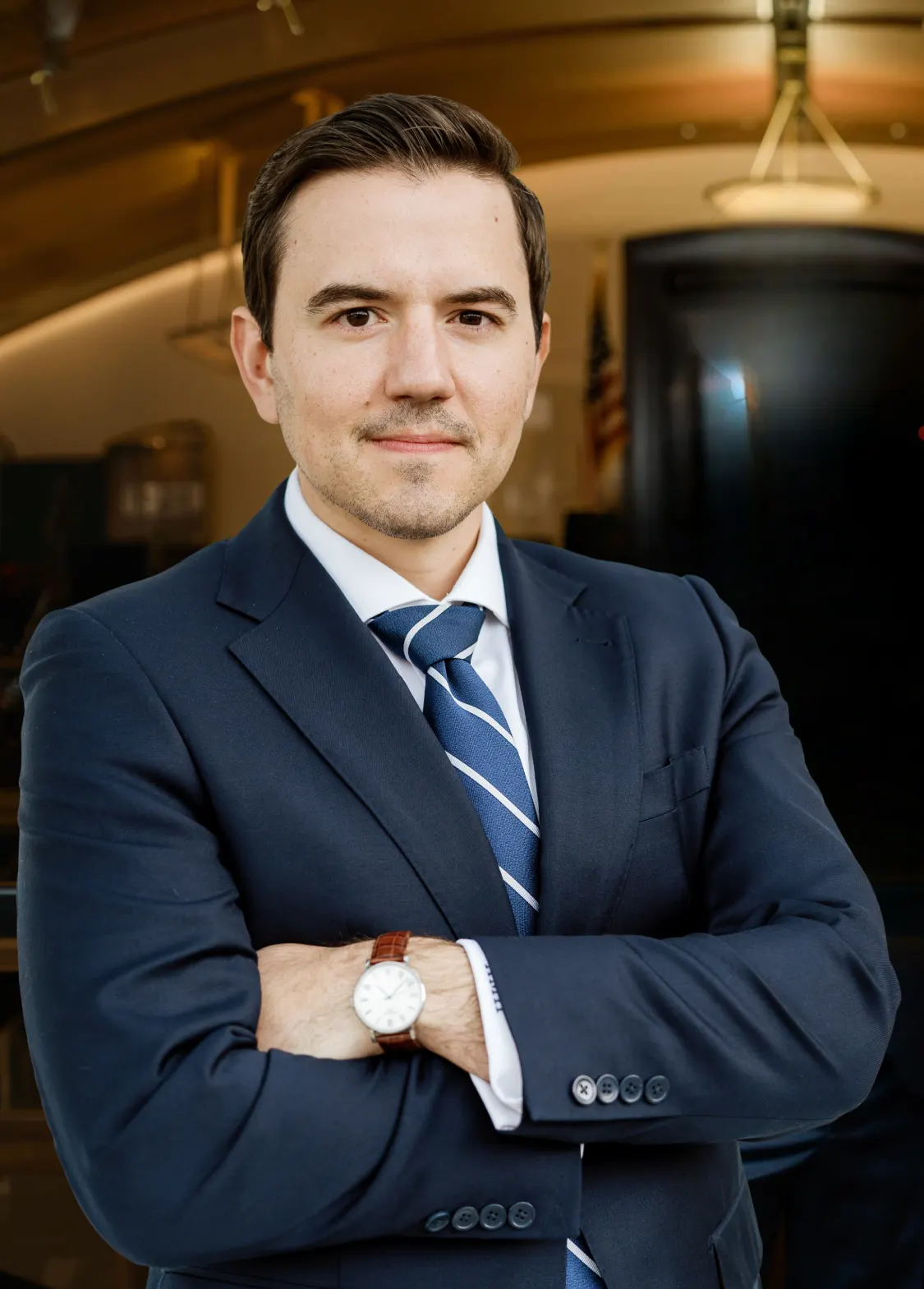
Before defending the accused, Austin Hagee prosecuted them as a felony prosecutor for the Bexar County District Attorney’s Office. A St. Mary’s University School of Law graduate with honors, recognized by Super Lawyers and the National Trial Lawyers, he prepares every case as though a jury will decide it, and he has taken cases to trial every year of his career.

Trial Attorney

Trial Attorney
Trial Counsel

Trial Attorney

Paralegal

Legal Assistant
Our office is on Austin Highway, minutes from the Bexar County courthouse complex where felony cases of this kind are tried. We also appear in the surrounding counties, including Comal (New Braunfels), Guadalupe (Seguin), Hays (San Marcos), Kendall (Boerne), and Atascosa (Pleasanton), and we take serious matters elsewhere in Texas.
See San Antonio criminal defense or our full areas we serve.
120 Austin Hwy #103 San Antonio, TX 78209
No. Murder requires intent. These statutes apply when a death or injury happened by accident or mistake while someone was intoxicated, with no intent to harm anyone. The classification is serious, but the offense is legally distinct.
Yes, charges are sometimes filed anyway, and this is where causation matters. If another cause was clearly sufficient to produce the result and your conduct was clearly insufficient, that is a defense the law recognizes and one we develop with evidence.
Sometimes, and sometimes not. Medical blood is drawn for treatment rather than investigation, and how the State obtained it is a separate legal question from how it was tested. Both are worth examining.
Not necessarily. Probation remains possible, though a deadly weapon finding removes the judge’s ability to grant it and leaves that decision to a jury. Outcomes turn on the evidence, your history, and how early the defense engaged.
Please speak with your lawyer first. That impulse is human and often well-intentioned, and it can still be used in ways that damage your case. There are appropriate ways to handle contact, and we can guide you through them.
Then identity and operation become central issues. Passengers are sometimes charged based on assumptions made at a chaotic scene, and reconstruction evidence can address who was behind the wheel.
Longer than most cases. Felony matters of this weight involve extensive discovery, forensic analysis, and multiple settings. We keep you informed throughout rather than leaving you waiting between court dates.
Never, and not without your counsel present. Investigators in these cases are trained and experienced, the interview is not casual, and statements made in the first days have consequences that last through trial.
Call us or request a free, strictly confidential consultation online. We answer new client inquiries 24 hours a day.