


Acquittal
Charge
Assault – Bodily Injury
November of 2025
There Are Two Versions of That Night. The Report Only Has One.
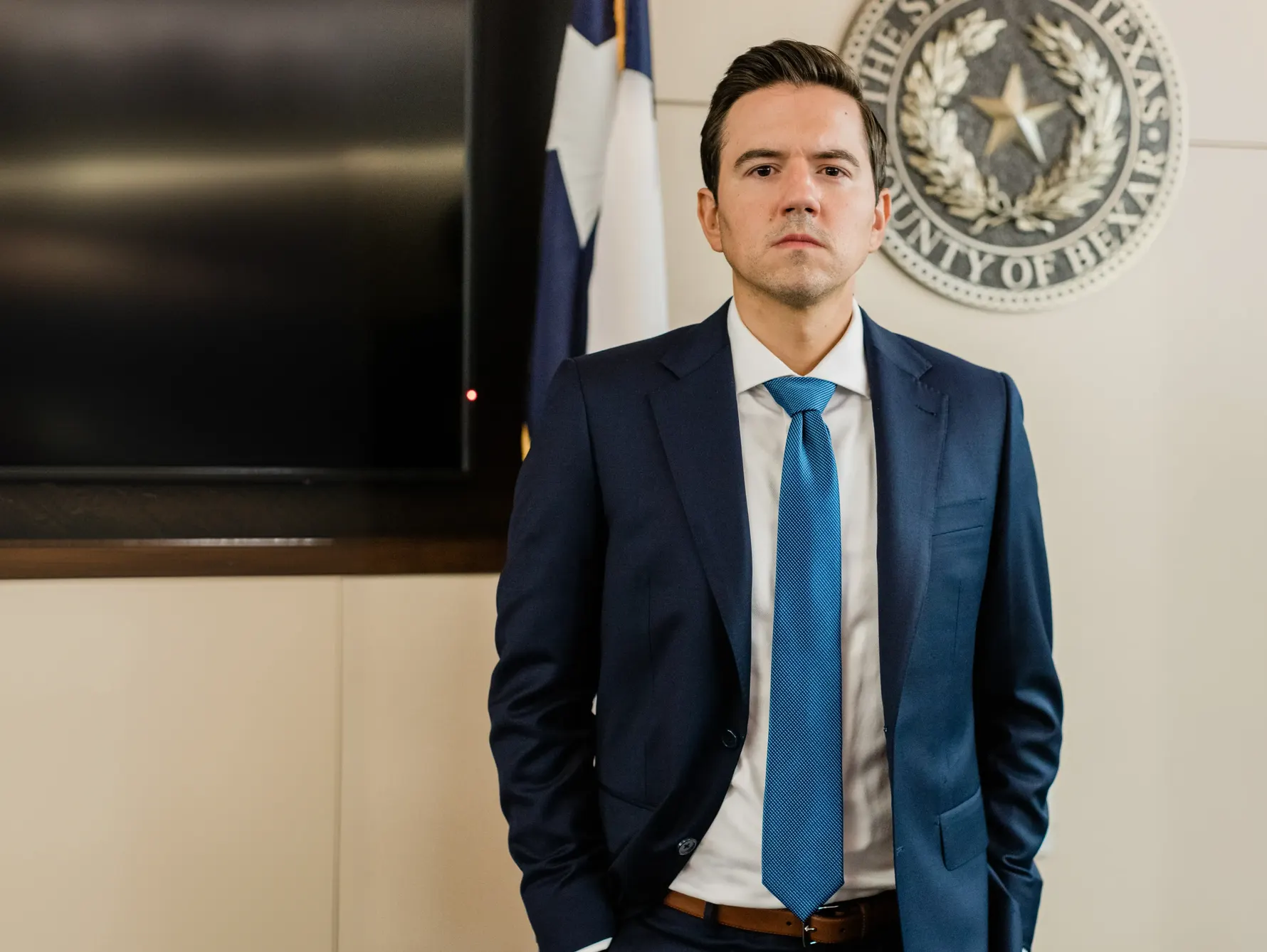
The offense report was written by an officer who arrived after it was over and heard from whoever spoke first and spoke the loudest. Austin Hagee prosecuted assault cases for the Bexar County District Attorney’s Office before he began defending them, and he knows how much of the State’s file is built on those first statements to police.
















Assault is the charge we defend more than any other, and the cases rarely resemble what the label suggests. They are arguments outside a bar that turned physical, disputes between neighbors, a shove during a breakup, a weapon shown to end a confrontation rather than start one. Someone called the police, an officer had to decide quickly, and now the person who was defending themselves is the one facing charges.
Former Prosecutor
Former Bexar County Felony and Family Violence Prosecutor
350+
Cases Dismissed
Free Consultations
New Client Inquiries Answered 24/7
People search for an assault and battery lawyer because most states split the two: battery for physical contact, assault for the threat of it. Texas merged them decades ago. Everything falls under Penal Code § 22.01, and what separates a fine-only citation from a year in county jail is whether the State alleges an injury.
That word does less work than it sounds like it should. Bodily injury in Texas can mean pain and nothing more, with no bruise, no treatment, and no visible mark. That's why a simple shove during an argument can support a Class A misdemeanor.
Two things turn an assault into aggravated assault under § 22.02: serious bodily injury, or the use or exhibition of a deadly weapon. Either one makes it a second-degree felony.
The escalation runs like this:
| Level | What the State alleges | Range |
|---|---|---|
| Class C Misdemeanor | A threat of imminent injury, or offensive contact | Fine only |
| Class A Misdemeanor | Bodily injury, which can mean pain alone | Up to 1 year, up to $4,000 |
| Third-Degree Felony | The complainant was a public servant, or the allegation involves choking | 2 to 10 years |
| Second-Degree Felony | Serious bodily injury, or a deadly weapon used or exhibited | 2 to 20 years |
| First-Degree Felony | A deadly weapon plus serious injury to a family or dating partner, or an enumerated victim such as a public servant | 5 to 99 years or life |
Both of those aggravating elements are more elastic than they appear, and both are contestable.
Serious bodily injury has a statutory definition: a substantial risk of death, serious permanent disfigurement, or protracted loss or impairment of a body part or organ. A broken nose treated and released does not automatically qualify. Prosecutors sometimes charge as though it does.
Deadly weapon reaches far past firearms. The statute covers anything that, in the manner of its use, is capable of causing death or serious injury. Prosecutors have applied it to boots, bottles, a length of pipe, and a vehicle. Whether the object in your case actually qualifies is a question worth litigating, because that single word moves a misdemeanor into a felony.
These cases run across the full range, from a first Class A misdemeanor to allegations that can carry decades in prison:
Assault involving a spouse, partner, or household member is charged as family violence and carries a distinct set of consequences.
Witnesses scatter, footage gets overwritten, and injuries heal before anyone photographs them. Tell us what happened while the evidence still exists.
Texas law gives you the right to meet force with force, and that right is broader here than in most states.
Under the Penal Code, you may use force when you reasonably believe it is immediately necessary to protect yourself against someone else's unlawful force. Deadly force becomes justified when you reasonably believe it is necessary to protect against deadly force, or against an aggravated kidnapping, sexual assault, robbery, or aggravated robbery. The same justification extends to defending another person, and to defending your property in defined circumstances.
Texas also imposes no duty to retreat. If you were somewhere you had a right to be, you did not provoke the confrontation, and you were not engaged in criminal activity, you were not required to back away before defending yourself.
Two practical points get lost in the statute. Reasonable belief is judged from your position at the moment, not with the clarity that comes afterward. And once self-defense is raised, the burden shifts back to the State to disprove it beyond a reasonable doubt.
Officers responding to a fight are not deciding who was justified. They are deciding who to arrest. The person who called first, the person with fewer visible injuries, and the person who stayed at the scene all shape that decision more than the law does. The case is about sorting out who the aggressor actually was.
Beyond justification, assault prosecutions rest on foundations that frequently do not hold.
Mutual conflict. Both people participated, both threw a punch, and only one got arrested. Establishing that changes both the charge and the negotiation.
The injury does not match the charge. Medical records, photographs, and treatment notes tell a more precise story than an offense report written from memory. Serious bodily injury allegations often collapse here.
Identification. In a crowded bar, a parking lot at night, or a group altercation, witnesses are confident and wrong more often than juries assume.
Motive to report. Allegations sometimes surface in the middle of a divorce, a custody dispute, or a business falling out. That context is provable with records and messages rather than argument.
Video. Body cam, dashcam, security footage, and phone recordings capture the first minutes before anyone has settled into a version. They routinely contradict the written narrative in helpful ways.
Statements. People explain themselves to officers expecting it to help. Whether those statements were lawfully obtained, and what they actually say once transcribed, both deserve examination.
One finding shapes an entire felony case, and it is decided separately from guilt.
When a court makes an affirmative deadly weapon finding, a judge loses the ability to grant community supervision, and parole eligibility requires serving half the sentence before it can even be considered. A jury can still recommend probation. That single fact drives strategy from the first setting, including whether punishment should be decided by a judge or a jury, and it is a decision we work through with you rather than around you.
A former Bexar County prosecutor can walk you through it on a free, confidential call.
Available 24/7 for new inquiries
Assault is the charge this firm defends most, and it appears throughout our results.
Past results do not guarantee a similar outcome. Every case is different.
A felony assault charge can take your freedom, your job, and your right to own a firearm. We quote a flat fee in writing before you hire us, then finance it ourselves with a low initial payment and monthly terms.
Available 24/7 for new inquiries
Austin charged and prosecuted assaults for Bexar County. He knows which files the office believes in, which ones it quietly wants resolved, and how a self-defense claim is evaluated from the other side of the table.
Austin has gone to trial every year since he was licensed to practice law. Juries decide self-defense, and the State negotiates differently with a lawyer prepared to put it in front of one.
Video gets overwritten, and injuries fade. We send preservation requests and locate witnesses at the outset, not after the State has finished shaping the record.
Arrests do not respect office hours. New client inquiries reach us any hour, any day.


Before defending the accused, Austin Hagee prosecuted them as a felony and family violence prosecutor for the Bexar County District Attorney’s Office. A St. Mary’s University School of Law graduate with honors, recognized by Super Lawyers and the National Trial Lawyers, he keeps his caseload deliberately small and prepares each case as though a jury will decide it.

Trial Attorney

Trial Attorney

Trial Counsel

Trial Attorney

Paralegal

Legal Assistant
Our office is on Austin Highway, minutes from the Bexar County courts. We also appear in the surrounding counties, including Comal (New Braunfels), Guadalupe (Seguin), Hays (San Marcos), Kendall (Boerne), and Atascosa (Pleasanton), and we take serious felony matters elsewhere in Texas.
See San Antonio criminal defense or our full areas we serve.
120 Austin Hwy #103 San Antonio, TX 78209
There is no battery offense here. Texas folds both the threat and the physical contact into a single assault statute, and the classification depends on whether there was injury, a threat, or offensive contact.
No. Once a case is filed, the District Attorney’s Office decides whether to pursue it. A statement from the complaining witness that they do not want to proceed carries weight with prosecutors, but it does not end the case.
Officers responding to a fight often arrest the person they believe was the aggressor based on very limited information, and that assessment is frequently wrong. Self-defense is litigated afterward, which is why documenting your version early matters.
Yes. Dismissals come through suppressed evidence, contradicted accounts, a justification defense the State cannot overcome, or a prosecutor concluding the case will not survive a jury.
It can. A felony conviction ends firearm rights, and an assault involving a family or household member carries firearm consequences even at the misdemeanor level. The details are on our family violence page.
More than most people expect. Anything capable of causing death or serious injury in the way it was used can qualify, including objects with ordinary everyday purposes. Whether the item in your case meets that standard is often disputed.
No. Probation, reduction, and dismissal all remain on the table depending on the evidence and your record, though a deadly weapon finding limits who can grant probation.
Not before speaking with a lawyer. Investigators reach out because a statement helps their case, and there is a way to provide your side that protects you rather than exposes you.
Call us or request your free, confidential consultation online. We answer new client inquiries 24 hours a day.